Create, Dare, Be Passionate!


Advice for installing DTF
Application guide
Tips for DTF installation
Unleash your creativity by embellishing your textiles professionally and distinctively. Follow this step-by-step guide to achieve perfect results every time you press them.
Heat press
, temperature
, pressure
, film peeling,
compatible media
Material
Essential tools
Before you begin, make sure you have the right equipment. The quality of the pressing depends as much on the equipment as on the technique.
Essential
Heat press
Essential for properly securing the transfer. Choose according to your needs: manual for beginners, pneumatic or automatic for greater consistency in production.
Recommended
Pressing mat or cushion
Allows you to compensate for seams, buttons or thicknesses of the fabric in order to obtain even pressure over the entire surface.
Optional
Protective paper or film
Place parchment paper or Teflon protective film between the transfer and the plate. This prevents the design from sticking and ensures a clean finish.
Settings
Settings according to the type of textile
Always adjust the temperature, time, and pressure according to the material of your substrate. Incorrect settings are the primary cause of failure.
Caution: Do not exceed 130°C to avoid color bleeding. Overheating can also burn the fabric or alter the colors.
Créadhésif tip: after peeling, go over the area for 5 to 10 seconds with a protective paper or a Teflon sheet to reinforce the durability of the transfer.
Step-by-step method
The 6 steps to a successful installation
Follow these steps in order to achieve a clean, durable and professional result.
1
Prepare the textile
Ensure your substrate is compatible (see table below), clean, dry, and free of creases. A 3- to 5-second through the heat press will remove moisture and flatten the surface—ensuring better adhesion of the transfer.
2
Position the transfer
Place the DTF film on the fabric, printed side up. Take your time to center the design. Tip: Use heat-resistant tape to hold the film in place if you are working on large pieces.
3
Adjusting the heat press
Adjust the temperature, time, and pressure according to the type of fabric (see the table above). Too low a temperature or too short a time can result in a poorly fixed design.
4
Perform the pressing
Lower the heat press and hold it closed according to the recommended settings. The pressure must be even for the transfer to adhere perfectly. Do not raise the heat press too quickly : wait until the indicated time has elapsed.
5
Remove the film
Allow to cool for a few seconds. The Créadhésif DTF film should be removed when cold. Peel it off gently, in a smooth, even motion, to avoid lifting the design. Wait 24 hours before the first wash.
6
Final fixation (recommended)
To reinforce its durability, quickly wipe it down for 5 to 10 seconds with parchment paper or a Teflon sheet. This step ensures optimal resistance to washing and use.
Best practices
Tips for a perfect transfer
Always test on a sample before launching a large series.
Avoid highly textured textiles (thick piqué, terry cloth) which reduce the adhesion of the transfer.
Wash your textiles inside out, at a maximum of 30°C, to prolong the life of the prints.
Air dry or tumble dry on low heat. Do not iron directly on the design.
Always pre-press the textile empty for a few seconds to expel residual moisture
In series production, calibrate your press regularly: the pressure can vary with use.
Compatibility
Compatible and incompatible media
DTF textiles can be applied to a very wide range of materials. Here's what you can (and can't) press.
Sustainability
Care of personalized textiles
Wait 24 hours after the transfer before the first wash.
Wash the garment inside out to protect the print from friction.
Washing temperature: 30°C maximum.
Air dry or tumble dry on low heat.
Avoid: ironing directly on the design, high-temperature tumble dryers, harsh detergents.
Our services
Printing and production times
100% Made in France. You send us your file, we take care of the rest. Upon receipt, all you have to do is press.
DTF Textile
Express 24H
Next Day Delivery
Standard
J+3
Eco
J+5
DTF UV
Standard
J+3
For printing on objects (phones, wood, metal, glass, plastic…)
Processing times
Order before 1:30 PM
Taken into account on the same day
Orders placed after 1:30 PM
Taken into account the following day
Excluding weekends and public holidays.
Frequently Asked Questions
FAQ — DTF Installation and Maintenance
Answers to frequently asked questions about applying your DTF transfers.
At what temperature should a DTF transfer be pressed onto cotton? +
On cotton, press at 160°C for 12 seconds with medium pressure. Allow to cool before removing the film (cold peel). A second 5-second pass with a protective paper will enhance durability.
Is the DTF film withdrawn while hot or cold? +
Créadhésif DTF transfers are removed cold. Wait a few seconds after lifting the heat press, then gently peel off the film with a smooth motion to avoid detaching the design.
Can a DTF transfer be applied to polyester? +
Yes, but at a maximum of 130°C for 20 seconds. Too high a temperature on polyester will cause sublimated colors to bleed through, altering the final result. Carefully follow the settings in the chart.
How long does a DTF transfer last in the wash? +
A properly applied DTF transfer can withstand numerous wash cycles. To maximize durability: wait 24 hours before the first wash, wash inside out at a maximum of 30°C, and avoid ironing directly on the design.
Which press should be used to apply DTF? +
A standard heat press is sufficient to get started. For mass production, a pneumatic or automatic press offers greater consistency and saves time. The key is that the press reaches the correct temperature and delivers even pressure across the entire surface.
Does DTF work on all textiles? +
DTF is compatible with the vast majority of textiles: cotton, polyester, blends, denim, and canvas. It does not work on knitted sweaters (due to the uneven surface) and is not recommended for use on swimwear and certain leathers without prior testing. For rigid objects, UV DTF is the appropriate solution.
Place an order
Your transfers ready to press.
Send us your file, we'll print it. All you have to do is press it.
Need help or advice?
Our team is available before, during, and after your order.
Have a question about a support or setting? Contact us.
What's on
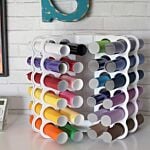
New! Storage tower for Flex or Vinyl - 36 slots
59,99 € 49,99 €
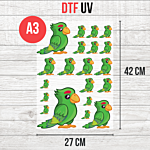
DTF UV Transfer Sheet - A3 Size - 27 x 42 cm
9,50 € 7,92 € From 6,50 €


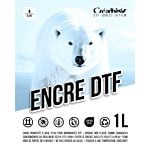
DTF Transfer Ink - 2nd Generation - White - 1L
49,00 € 40,83 €