Create, Dare, Be Passionate!


Pressing Conditions Sheets
Technical Resources — PDF Download
DTF, Sublimation & Flex Pressing Conditions
Find all the heat pressing parameters by technique: temperature, duration, pressure, peeling, and recommended press type. Technical data for DTF, sublimation (all substrates), flex printing, and DTF conditions by textile material.
DTF
Sublimation
Flex colors & creatives
3 free PDF sheets
Indicative data
Why adhere to pressing conditions?
Temperature, duration, pressure: the 3 key parameters
Successful pressing relies on three interdependent parameters: temperature, pressing time , and pressure. Incorrect settings can lead to detached transfers, dull colors, or damaged substrates.
These tables are for guidance only. Conditions may vary depending on your heat press and the size of your materials. Always perform a test press before starting mass production.
DTF Transfer
DTF pressing conditions by material
Recommended parameters for applying DTF transfers according to the type of textile or substrate.
Indicative table. Adjust your settings after a test press. Conditions vary depending on the type of press and the size of the substrate.
Download the DTF PDF datasheetSublimation
Sublimation pressing conditions by substrate
Recommended parameters for all sublimable media: ceramic, textile, plastic, glass, metal, wood, cardboard and specific shaped objects.
Indicative table. Position a silicone sheet on an acrylic support and remove the excess paper with a damp sponge after peeling.
Download the Sublimation Fact SheetFlex & Flocking
Flex pressing recommendations by product
Temperatures, pressing time, peeling and blade type for the main flex on the market: classic colors, specific flex and creative flex.
Flex classic colors
Specific (technical) flexes
Creative flex (glitter, reflections, embossing…)
Indicative table. Always carry out a test before mass production.
Download the Flex PDF sheetFrequently Asked Questions
FAQ — Pressing Conditions
At what temperature should a DTF transfer be pressed onto cotton? +
For cotton, the recommended temperature is 130 to 160°C for 12 to 15 seconds at a pressure of 3.5 to 5 bars. Peeling is carried out while the fabric is cold. A second pressing of 5 to 10 seconds under the same conditions can be performed if necessary.
What temperature is needed to press a mug using sublimation printing? +
For a ceramic mug, the recommended temperature is 200°C for 3 minutes with medium to high pressure. Peeling should be done while hot. For a glass mug, lower the temperature to 150°C and increase the time to 4 minutes and 30 seconds.
Should the flex be peeled off hot or cold? +
It depends on the product. Most standard heat transfer vinyls (Siser Easyweed, Stahls Premium, Politape) are hot-. Some creative vinyls like Metal Flex SEF, Brick Siser, Holographic, or Chameleon Stahls are cold-. Others (Velcut, Twinkle) are warm-. Always check the product information before pressing.
Can DTF be pressed onto polyester at the same temperature as onto cotton? +
No. Polyester can withstand a lower temperature: 120 to 140°C compared to 130 to 160°C for cotton. Too high a temperature can damage or fuse synthetic fibers. For a cotton/polyester blend, use 145°C as a reference temperature. Always perform a test pressing on the intended material first.
Why perform a test pressing before mass production? +
Pressing conditions vary depending on the type and brand of heat press, the size of the substrate , and the exact composition of the textile. The tables provided are indicative starting points. A test press allows you to adjust the parameters and avoid wasting substrates or transfers during a large production run.
Ready to press your first creations?
Order your ready-to-press DTF transfers or check out our complete application guide.
Technical questions: [email protected] — +33 1 34 33 01 55
What's on
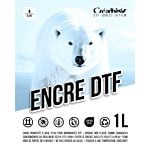
DTF Transfer Ink - 2nd Generation - White - 1L
49,00 € 40,83 €
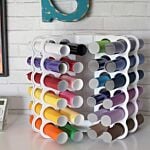
New! Storage tower for Flex or Vinyl - 36 slots
59,99 € 49,99 €


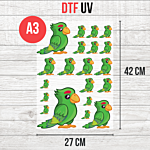
DTF UV Transfer Sheet - A3 Size - 27 x 42 cm
9,50 € 7,92 € From 6,50 €
